
Improving Emergency Alert Text Messages to Align with Public Expectations
Research shows people’s natural urge to “mill” additional information and prior experience and knowledge with hazards dictates how communities respond to alerts about imminent danger.
01 — Research Summary
Introduction
September is National Preparedness Month in the U.S., an observance the Federal Emergency Management Agency (FEMA) has recognized annually since 2004 to encourage emergency preparedness. As climate change increases the frequency and intensity of severe natural disasters worldwide, government agencies rely on cell phone alerts to warn the public of imminent dangers, such as flash floods and tornadoes, and to recommend protective actions.
Because of the critical importance of these warning messages, they have become a key focus for communication scholars.
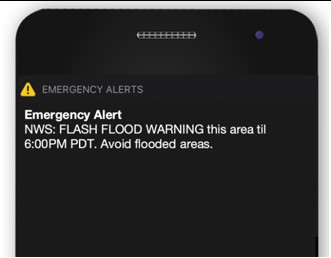
For this inaugural edition of NCA Amplified, September 2026, we are highlighting recent National Communication Association (NCA) research on how the public responds to Wireless Emergency Alerts (WEA), which are text messages sent to cell phones to warn people about imminent hazards at their location. Published in the Journal of Applied Communication Research, researchers Elizabeth J. Carlson, Hamilton Bean, Chelsea Ratcliff, Manu Pokharel, and Joshua B. Barbour examined how the public interprets and intends to respond to these text-based WEA messages.
In September 2022, the research team surveyed 481 U.S. residents, providing hypothetical WEA messages and asking open-ended questions about what they would do first and why. The study aimed to uncover what factors influence public response and to challenge traditional, top-down assumptions guiding how these messages are designed.
Most People Respond to Emergency Alerts with Caveats
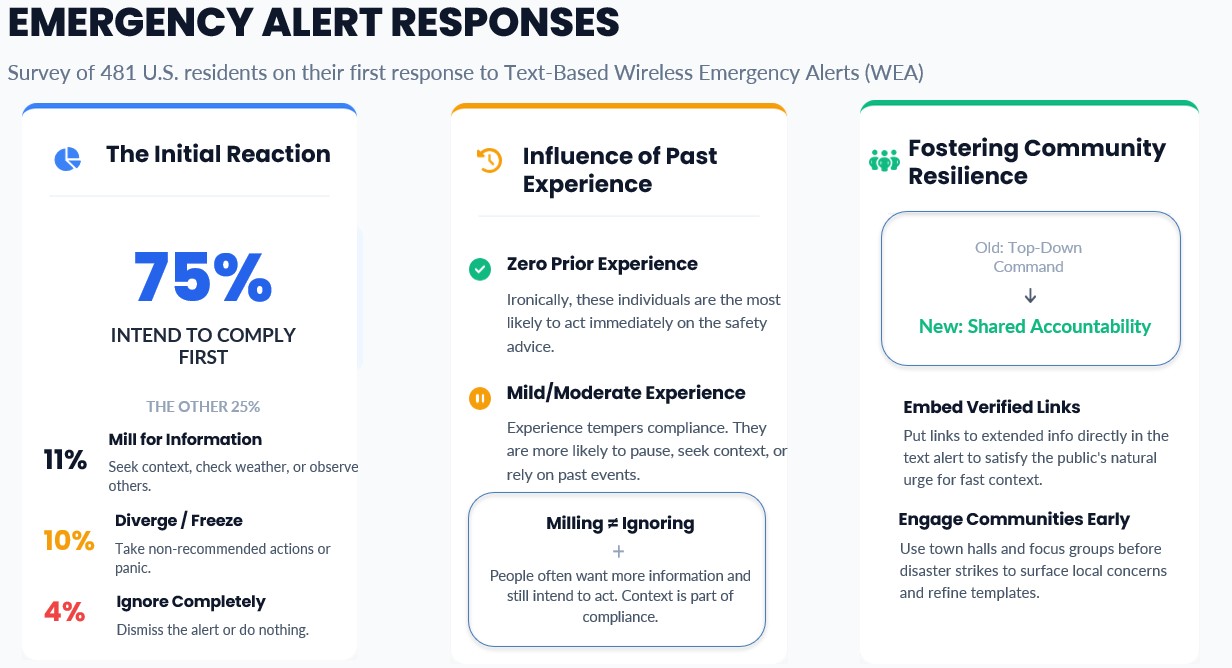
Overall, WEA messages appear highly effective: 75% of participants indicated their first response would be to take recommended self-protective actions (e.g., seeking shelter or evacuation).
However, the study revealed significant nuances. Regardless of their initial response, a considerable portion of people wanted to seek more information, which is a behavior researchers call “milling.” Historically, scholars assumed that following safety instructions and seeking more information were mutually exclusive. This study demonstrates that people do not view these actions as conflicting; those who intended to seek additional information about the alerts they received were often still planning to follow the initial safety advice, too.
Furthermore, people’s prior experience and knowledge about specific hazards significantly influenced their responses. Counterintuitively, participants with zero hazard experience were the most likely to comply directly with the alert’s instructions. In contrast, those with moderate hazard experience were more likely to seek additional information, take non-recommended actions, or just ignore the warning. Finally, those with at least a moderate amount of knowledge about the specific hazard were less likely to “personalize” the risk, that is, to think about how the hazard could directly impact them, when explaining the reasoning behind their response. These caveats strongly suggest that the experts who design and create WEA messages and related campaigns might benefit from some changes in how they learn about audience reactions to the messages.
From a Top-Down to a Community-Based Approach
Rather than relying on a traditional protective paternalistic approach, where government experts and technocrats issue directives and expect immediate, unquestioning compliance from the public, the results of this study suggest a public-safety-as-community-resilience model instead. This approach emphasizes shared accountability and mutual understanding between emergency managers and the communities they serve.
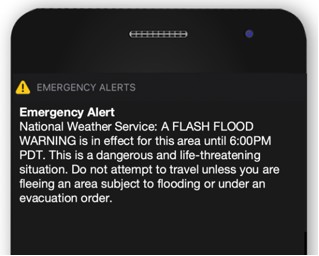
Because people naturally want to seek additional information during an emergency, Carlson and colleagues suggest that public safety officials could validate this preference by embedding links to extended information or safety apps directly within WEA messages. Additionally, emergency communication planners should proactively and more frequently include laypeople in the message creation process. By utilizing focus groups, town-hall meetings, and pilot testing, officials can better understand the public’s concerns and refine message templates before disaster strikes.
Conclusion
While the majority of the public intends to take recommended actions after receiving text alerts, public response rates to emergency orders could be further improved by shifting how knowledge is shared. By abandoning a strictly top-down approach in favor of inclusive, community-oriented communication, public safety officials can craft WEA messages that are more useful and trusted, ultimately helping more people avoid danger when natural disasters or any other type of imminent threat is nearby.
02 — Key Applications
- Future generations will continue to face imminent dangers from climate change. Teaching students information and media literacy will help them become better consumers of emergency alerts when they receive them.
- In the context of natural disasters, teaching students about what our technology can (and cannot) reliably predict will also make them smarter consumers of the information.
- The process of creating and disseminating emergency messages would be improved by involving the public from the beginning through town halls, focus groups, and community surveys.
- Shifting from a top-down paternalistic model to one of shared accountability will legitimize community input and strengthen overall community resilience.
- Be mindful of how emergency alerts are reported.
- Avoid talking down to audiences; instead, anticipate the questions government alerts leave unanswered and provide that missing information.
- Help demystify the warning process by explaining the predictive models, system constraints, and uncertainties that technical experts (e.g., meteorologists) face.
- When helpful, utilize analogies to help public understand complicated concepts.
- Model and encourage community resilience by helping to shift the discourse away from blaming individuals who don’t immediately comply with warnings, and toward shared accountability for community safety.
- When building campaigns to inform the public about emergency alerts, seek direct insight from the intended audiences about their specific concerns and past hazard experiences.
- Avoid technocratic messaging; instead, co-create campaigns that build trust and credibility by respecting the public’s desire for additional context.
- Implement strategic communication processes that recognize community competence and prioritize inclusivity, flexibility, and community participation in safety messaging.
- Work with government agencies on PSAs designed to improve the public’s preparedness for emergencies.
- Partner with public safety professionals during non-emergency periods to host town halls, focus groups, visits to community groups, and similar initiatives where people can voice their concerns, questions, and past hazard experiences.
- Help contextualize public warnings by engaging in dialogue to educate the community on what Wireless Emergency Alert (WEA) template messages mean, the limitations of predictive technology, and the options residents have for responding.
03 — Citation and Link to Study
Carlson, E. J., Bean, H., Ratcliff, C., Pokharel, M., & Barbour, J. B. (2026). How regular people interpret mobile warning messages: re-organizing ‘knowing.’ Journal of Applied Communication Research, 1–23. https://doi.org/10.1080/00909882.2026.2682832
Read the Open-Access Article
04 — About the Authors
Elizabeth Carlson is an Assistant Professor of Communication Studies at the University of Tennessee, Knoxville.
Hamilton Bean is a Professor in the Department of Communication at the University of Colorado Denver.
Chelsea Ratcliff is an Associate Professor in the Department of Communication Studies at the University of Georgia.
Manu Pokharel is an Associate Professor in the Department of Communication at Texas State University.
Joshua Barbour is a Professor in the Department of Communication at the University of Illinois Urbana-Champaign.
This research summary is authored by Igor Ristić, NCA Research Associate and Adjunct Faculty in the Master of Arts in Communication Program at Johns Hopkins University.
Generative AI Acknowledgment: This document was developed with the assistance of the generative artificial intelligence (AI) primarily to support cross-referencing, grammar / spell checking, and similar steps. All content has been reviewed, revised, and validated by the author to ensure accuracy, alignment with NCA priorities, and appropriateness for the intended audience. The final document reflects the author’s professional judgment, expertise, and original intent. No confidential, proprietary, or sensitive information was entered into AI systems in the preparation of this document.

Members of the press seeking interviews with the researchers or NCA experts:
communications@natcom.org
NCA Amplified is new — tell us what you think and what you’d like to see in future editions.
Share Your Feedback