
July 18: Federal Student Loan Program Provisions Effective Upon Enactment Under the One Big Beautiful Bill Act
(This letter (from Jeffrey R. Andrade, Deputy Assistant Secretary of Education for Policy, Planning, and Innovation) provides information about the immediate implementation of certain provisions impacting Federal Student Aid Title IV programs under the One Big Beautiful Bill Act.)
On July 4, 2025, President Trump signed the One Big Beautiful Bill Act (P.L. 119-21) (OBBB) into law. The OBBB contains numerous provisions that amend the Higher Education Act of 1965 (HEA) and impact the administration of Title IV, HEA programs. Many of the changes under the OBBB will be implemented on July 1, 2026, and over the subsequent years. However, several changes made by the OBBB became effective upon enactment. This Dear Colleague Letter (DCL) addresses the changes that became effective upon enactment. Additionally, there will be forthcoming regulations and guidance on the other provisions of the OBBB later this year.
The OBBB eliminates the requirement that borrowers have a partial financial hardship to qualify for enrollment in an income-based repayment (IBR) plan authorized under section 493C of the HEA. A borrower is considered to have a partial financial hardship if the payment amount calculated under a standard 10-year repayment plan exceeds the amount calculated under the IBR plan. This change is effective upon enactment and the Department is currently working with its student loan servicers to remove the partial financial hardship eligibility requirement from the IBR enrollment process.
Because of this change, borrowers who have loans made on or after July 1, 2014, and before July 1, 2026, and did not qualify for partial financial hardship, are now eligible for the IBR plan. This IBR plan requires payments of 10 percent of discretionary income and has a repayment period of 20 years, with any remaining balance cancelled. In contrast, prior to this change, these borrowers only had access to the Income Contingent Repayment plan, which requires payments of 20 percent of discretionary income and loan cancellation after 25 years.
The OBBB allows borrowers with a consolidation loan that repaid a Parent PLUS Loan to enroll in an IBR plan effective upon enactment. The Secretary will provide additional information to its federal loan servicers and update the Studentaid.gov website when the system is available to enable such borrowers to enroll in IBR.
The OBBB reduces the amount of a loan that a student may borrow for an academic year if the student is enrolled in a program of study on less than a full-time basis during that academic year. This reduction in the annual loan limit will be made in direct proportion to the degree to which the student is not enrolled full-time, rounded to the nearest percentage point.
The Department is currently developing the schedule of reductions that is required by the OBBB and will submit it for public comment later this year. Once public comments are received and reviewed, the revised schedule of reductions will be issued by the Secretary and used to determine the reduction in the annual loan limits for students who are enrolled less than full-time for subsequent academic years (2026-27 and beyond). Institutions will be required to use this schedule of reductions when reducing the annual loan limits for all students who are not enrolled full-time in those academic years.
The OBBB amends the Public Service Loan Forgiveness (PSLF) program to allow for payments made under the newly created Repayment Assistance Plan (RAP) to count toward loan forgiveness, if all other eligibility criteria are met. The RAP was created by the OBBB and will be in effect no later than July 1, 2026. This PSLF provision is effective upon enactment, meaning that whenever the Department launches the RAP program, borrowers will be able to immediately get credit for PSLF under RAP.
The OBBB delays implementation of the Biden Administration’s Borrower Defense to Repayment regulations under 34 CFR Part 685, Subpart D. The previous Trump Administration’s Borrower Defense to Repayment regulations that were effective beginning July 1, 2020, will be effective as if the regulations were never amended during the Biden Administration for loans originated before July 1, 2035. The Biden Administration’s regulations were not enforced prior to enactment of the OBBB because they are unlawful and were enjoined by a federal court. This provision is effective upon enactment and the Department will publish a Federal Register notice shortly that restores the regulations that were in effect on July 1, 2020.
The OBBB delays implementation of the Biden Administration’s Closed School Loan Discharge regulations under 34 CFR 674.33(g), 682.402(d), 685.214. The Closed School Discharge regulations that were effective July 1 ,2020, will be effective as if the regulations were never amended. The regulations relating to those provisions will be effective for any loans originated prior to July 1, 2035. This provision is effective upon enactment and the Department plans to publish a Federal Register notice that restores the regulations that were in effect on July 1, 2020.
July 21: (AP) Columbia University announced Wednesday it has reached a deal with the Trump administration to pay more than $220 million to the federal government to restore federal research money that was canceled in the name of combating antisemitism on campus.
Under the agreement, the Ivy League school will pay a $200 million settlement over three years, the university said. It will also pay $21 million to resolve alleged civil rights violations against Jewish employees that occurred following the Oct. 7, 2023, Hamas attack on Israel, the White House said. “This agreement marks an important step forward after a period of sustained federal scrutiny and institutional uncertainty,” acting University President Claire Shipman said. The school had been threatened with the potential loss of billions of dollars in government support, including more than $400 million in grants canceled earlier this year. The administration pulled the funding because of what it described as the university’s failure to squelch antisemitism on campus during the Israel-Hamas war.
July 23: Executive Order signed: “Preventing Woke AI in the Federal Government”
The order mandates agency heads to procure only large language models (LLMs) that adhere to “Unbiased AI Principles” of truth-seeking and ideological neutrality. Truth-seeking means that LLMs must be truthful and prioritize historical accuracy, scientific inquiry, and objectivity and acknowledge uncertainty where reliable information is incomplete or contradictory. Ideological neutrality means that “LLMs shall be neutral, nonpartisan tools that do not manipulate responses in favor of ideological dogmas such as DEI.” The order instructs the Director of the Office of Management and Budget, in consultation with other federal leaders, to issue guidance for agencies to implement these principles in AI procurement. It mandates that federal contracts for LLMs include terms ensuring compliance with the Unbiased AI Principles, including terms holding vendors accountable for certain costs if contracts are terminated due to noncompliance. (ACE)
July 23: The White House unveiled “Winning the Race: America’s AI Action Plan.”
The plan was released in accordance with President Trump’s Jan. 23, 2025, executive order on Removing Barriers to American Leadership in Artificial Intelligence. The AI Action Plan identifies over 90 federal policy actions across three pillars, including accelerating innovation, building American AI infrastructure, and leading in international diplomacy and security, that the administration will begin implementing in the coming weeks and months. The plan outlines policies aimed at supporting U.S. leadership in artificial intelligence by facilitating the export of complete AI systems to allied nations, streamlining permits for data centers and semiconductor facilities, reviewing and potentially removing federal regulations that may hinder AI development, and updating procurement guidelines to prioritize objectivity in government-contracted AI models. ACE and the higher education community submitted comments on the proposed AI action plan earlier this year.
July 23: U.S. Department of Education opens investigations into five universities for alleged exclusionary scholarships benefitting illegal alien students.
The DOE’s Office for Civil Rights (OCR) has opened national origin discrimination investigations into the University of Louisville, the University of Nebraska Omaha, the University of Miami, the University of Michigan, and Western Michigan University. The investigations will determine whether these universities are granting scholarships only for Deferred Action for Childhood Arrivals (DACA) or “undocumented” students, in violation of Title VI of the Civil Rights Act of 1964’s (Title VI) prohibition against national origin discrimination. These investigations are based on complaints submitted to OCR by the Legal Insurrection Foundation’s Equal Protection Project, which seeks to ensure equal protection under the law and non-discrimination by the government in any form.
“On January 20, 2025, President Trump promised that ‘every single day of the Trump Administration, [he] will, very simply, put America first.’ Neither the Trump Administration’s America first policies nor the Civil Right Act of 1964’s prohibition on national origin discrimination permit universities to deny our fellow citizens the opportunity to compete for scholarships because they were born in the United States,” said Acting Assistant Secretary for Civil Rights Craig Trainor. The investigations also will examine additional scholarships that appear to exclude students based on other aspects of Title VI, including race and color.
July 24: Executive Order signed for “Saving College Sports.”
The order aims to preserve scholarship opportunities and roster spots in women’s and non-revenue sports across collegiate athletic programs. It outlines different expectations based on athletic department revenue levels during the 2024–25 season:
- Departments with over $125 million in revenue should increase scholarship opportunities in nonrevenue sports compared to 2024–25 and must offer the maximum number of roster spots permitted under applicable collegiate athletic rules.
- Departments with over $50 million in revenue should provide at least as many scholarship opportunities as in 2024–25 and likewise offer the maximum number of roster spots in non-revenue sports.
- Departments with $50 million or less in revenue, or with no revenue-generating sports, should not disproportionately reduce scholarship opportunities or roster spots based on a sport’s revenue generating status. The Secretary of Education is tasked with developing a plan to implement policies that preserve and expand women’s and non-revenue sports and prohibit third-party pay-for-play payments. Within 60 days, the attorney general and the chairman of the Federal Trade Commission must review and revise litigation strategies and develop a plan to implement future legal protections for college athletics.
July 24: Federal court blocks DoD indirect cost cap pending further review.
A federal judge has granted a preliminary injunction preventing the Department of Defense (DoD) from enforcing its recently announced 15 percent cap on indirect cost reimbursements for university research. Unlike injunctions issued in our other cases challenging caps on indirect costs, this injunction issued on July 18 is not nationwide. Instead, it applies only to the universities named in the lawsuit as well as all member institutions of ACE, AAU, and/or APLU, including when they are acting as collaborators or subgrantees. The lawsuit, filed in June by the three associations and several individual institutions, challenges the DoD’s unilateral implementation of the cap, which was introduced without prior notice or opportunity for public comment. A hearing on summary judgment is scheduled for Sept. 4. If the court ultimately rules in favor of the plaintiffs, the federal government is expected to appeal. In the meantime, institutions may continue to submit research proposals at their full, negotiated indirect cost rates rather than the capped rate.
July 24: (AP) Columbia University announced Wednesday it has reached a deal with the Trump administration to pay more than $220 million to the federal government to restore federal research money that was canceled in the name of combating antisemitism on campus.
Under the agreement, the Ivy League school will pay a $200 million settlement over three years, the university said. It will also pay $21 million to resolve alleged civil rights violations against Jewish employees that occurred following the Oct. 7, 2023, Hamas attack on Israel, the White House said. “This agreement marks an important step forward after a period of sustained federal scrutiny and institutional uncertainty,” acting University President Claire Shipman said. The school had been threatened with the potential loss of billions of dollars in government support, including more than $400 million in grants canceled earlier this year. The administration pulled the funding because of what it described as the university’s failure to squelch antisemitism on campus during the Israel-Hamas war.
July 25: (AP) President Trump signed an executive order mandating that federal authorities clarify whether college athletes can be considered employees of the schools they play for in an attempt to create clearer national standards in the NCAA’s name, image and likeness era.
Trump directed the secretary of labor and the National Labor Relations Board to clarify the status of collegiate athletes through guidance or rules “that will maximize the educational benefits and opportunities provided by higher education institutions through athletics.” The order does not provide or suggest specifics on the controversial topic of college athlete employment. The move comes after months of speculation about whether Trump will establish a college sports commission to tackle some of the thorny issues facing what is now a multibillion-dollar industry. He instead issued an order intended to add some controls to “an out-of-control, rudderless system in which competing university donors engage in bidding wars for the best players, who can change teams each season.”
July 30: (AP) Brown University will pay $50 million to Rhode Island workforce development organizations in a deal with the Trump administration that restores lost federal research funding and ends investigations into alleged discrimination, officials said.
The university also agreed to several concessions in line with President Trump’s political agenda. Brown will adopt the government’s definition of “male” and “female,” for example, and must remove any consideration of race from the admissions process. Brown President Christina H. Paxson said the deal preserves Brown’s academic independence. The terms include a clause saying the government cannot dictate curriculum or the content of academic speech at Brown.
Aug. 7: Executive Order signed, “Ensuring Transparency in Higher Education Admissions.”
The memorandum directs the Secretary of Education to revamp the Integrated Postsecondary Education Data System (IPEDS) to “provide adequate transparency” into college admissions following the Supreme Court’s ruling on race-based admissions. The Department of Education (ED) must overhaul the IPEDS portal and data presentation to improve accessibility, and within 120 days expand required reporting on admissions. ED must also increase accuracy checks and take remedial action under Title IV and other applicable laws against institutions that fail to submit complete or timely data. (ACE)
Aug. 7. Executive Order signed, “Improving Oversight of Federal Grantmaking.”
In order to “to improve the process of Federal grantmaking while ending offensive waste of tax dollars,” this order directs federal agencies to strengthen oversight of discretionary grants to ensure they align with agency priorities and the “national interest.” Agency heads must designate a senior appointee “responsible for creating a process to review new funding opportunity announcements and to review discretionary grants to ensure that they are consistent with agency priorities and the national interest.” Agencies are also required to streamline application requirements and give preference to institutions with lower indirect cost 11 rates and commitments to “Gold Standard Science.” The order prohibits funding for projects that promotes funding for projects that promote racial preferences, reject “the sex binary,” support illegal immigration, or “compromise public safety or promote anti-American values.” It also requires clear benchmarks for success, limits facilities and administrative cost allowances, and mandates grant terms “permit termination for convenience” if awards no longer advance agency priorities.
Aug. 7: Secretary of Education Linda McMahon directors National Center for Education Statistics to collect universities’ data on race discrimination in admissions (directive follows President Trump’s memorandum claiming to ensure transparency in higher education admissions). [Editor’s Note: By Aug. 7, the Trump administration had fired or laid off virtually the entire staff of the National Center for Education Statistics staff, so it was uncertain how such data could or would be collected.]
The Education Department said that as part of its regular data reporting process, institutions of higher education will now have to report data disaggregated by race and sex relating to their applicant pool, admitted cohort, and enrolled cohort at the undergraduate level and for specific graduate and professional programs. This data will include quantitative measures of applicants’ and admitted students’ academic achievements such as standardized test scores, GPAs and other applicant characteristics. McMahon also directed NCES to develop a rigorous audit process to ensure the data being collected is accurate and reported consistently across institutions.
“Following the revelations of rampant racial preferencing in college admissions exposed by SFFA v. Harvard, the Trump Administration is now standardizing reporting from colleges and universities to provide full transparency into their admissions practices. It should not take years of legal proceedings, and millions of dollars in litigation fees, to elicit data from taxpayer-funded institutions that identifies whether they are discriminating against hard working American applicants. Going forward, universities will be required to provide this data directly to us through an existing data system.” In the past, IPEDS surveys asked only for the racial breakdown of enrolled students, not applicants or admittees. The E.D. said these new requirements will enable the American public to assess whether schools are passing over the most qualified students in favor of others based on their race.
Aug. 8: (AP) Several elite U.S. colleges have made deals with President Donald Trump’s administration, offering concessions to his political agenda and financial payments to restore federal money that had been withheld.
Ivy League schools Columbia, Brown and the University of Pennsylvania reached agreements to resolve federal investigations. The Republican administration is pressing for more, citing the deal it negotiated with Columbia as a “road map” for other colleges. There is a freeze on billions of dollars of research money for other colleges including Harvard, which has been negotiating with the White House even as it fights in court over the lost grants. And on Friday, a White House official said the Trump administration is seeking a $1 billion settlement from the the University of California, Los Angeles. Like no other president, Trump has used the government’s control over federal research funding to push for changes in higher education, decrying elite colleges as places of extreme liberal ideology and antisemitism.
Aug. 19: U.S. Department of Education “guidance” prohibits federal funds from supporting political activism on college campuses.
The department rescinded Biden-era guidance that allowed Federal Work Study (FWS) programs to pay students to engage in certain partisan and nonpartisan political activities. The Department clarified that institutions should focus FWS funds on jobs that provide real-world work experience instead of political activities. The Department’s action follows a letter from sixteen Republican attorneys general that outlined how the Biden-era guidance violated federal law. In addition, the Department’s new guidance makes clear that the Higher Education Act (HEA) does not require institutions to distribute voter registration forms to students known to be ineligible to vote.
Under the HEA, institutions are required to make a “good faith” effort to distribute voter registration forms to students. To give institutions ample flexibility to ensure that they are not aiding and abetting voter fraud, the Department has clarified that it does not interpret this “good faith” provision in the HEA to mean that institutions are required to distribute voter registration information to students who the institution has reason to believe are ineligible to vote in federal or state elections, such as international students. In addition, the Department requests institutions notify students that:
- Only citizens of the United States may vote in federal elections;
- Voting more than once, including voting in two or more states, is prohibited under federal law;
- Knowingly or willfully providing false information, including relating to name, address, or period of residence, in the voting district for the purpose of establishing eligibility to register or vote is prohibited under federal law; and
- In most states, individuals may only register to vote where they are domiciled, and they may not be domiciled in more than one place.
Aug. 23: (AP) Administrators at the state university’s campus in Colorado Springs thought they stood a solid chance of dodging the Trump administration’s offensive on higher education.
Students and faculty alike describe the university, which is in a conservative part of a blue state, as politically subdued, if not apolitical. An Associated Press review of thousands of pages of emails from school officials, as well as interviews with students and professors, reveals that school leaders, teachers and students soon found themselves in the Republican administration’s crosshairs, forcing them to navigate what they described as an unprecedented and haphazard degree of change.
Aug. 30: One international student after another told the University of Central Missouri this summer that they couldn’t get a visa, and many struggled to even land an interview for one.
Even though demand was just as high as ever, half as many new international graduate students showed up for fall classes compared to last year. The decline represents a hit to the bottom line for Central Missouri, a small public university that operates close to its margins with an endowment of only $65 million. International students typically account for nearly a quarter of its tuition revenue. “We aren’t able to subsidize domestic students as much when we have fewer international students who are bringing revenue to us,” said Roger Best, the university’s president. Signs of a decline in international students have unsettled colleges around the U.S. Colleges with large numbers of foreign students and small endowments have little financial cushion to protect them from steep losses in tuition money.
Sept. 3 (AP) A federal judge in Boston on Wednesday ordered the Trump administration to reverse its cuts of more than $2.6 billion in research funding for Harvard University, delivering a significant victory to the Ivy League school in its battle with the White House.
U.S. District Judge Allison Burroughs ruled the cuts amounted to illegal retaliation for Harvard’s rejection of the Trump administration’s demands for changes to Harvard’s governance and policies. The government had tied the funding freezes to Harvard’s delays in dealing with antisemitism, but the judge said the university’s federally backed research had little connection to discrimination against Jews. “A review of the administrative record makes it difficult to conclude anything other than that (the government) used antisemitism as a smokescreen for a targeted, ideologically motivated assault on this country’s premier universities,” Burroughs wrote. The country must fight antisemitism, she wrote, but it also must protect the right to free speech.
Sept. 5. The U.S. Department of Education’s (Department) Office of Federal Student Aid (FSA) announced that it is expanding the mission and work of the Office of the Ombudsman to focus on providing information to students and families on the benefits and risks of federal student loan borrowing.
Given that federal student loan debt is nearing $1.7 trillion, and loan defaults and delinquencies remain at record highs, the Office of the Ombudsman will be refocused as the Office of Consumer Education and Ombudsman. Historically, the Office has focused solely on resolving borrower complaints. Going forward, the office will also take on a proactive approach to improve financial literacy among students, parents, and borrowers so that they are better equipped to make careful borrowing decisions and responsibly manage their federal student loan debt. In addition, FSA announced that the Office of Consumer Education and Ombudsman will develop a centralized Common Manual for servicing and collection practices and policies under the William D. Ford Federal Direct Loan Program. The manual will create federal guidelines and guardrails for vendor operations, ensuring consistent borrower communications, customer service, and enforcement actions.
Sept. 10: U.S. Dept. of Education says it is ending funding to racially discriminatory grant programs at minority-serving in institutions.
The U.S. Solicitor General determined in July that the Hispanic-Serving Institutions (HSI) programs “violate the equal-protection component of the Fifth Amendment’s Due Process Clause,” and that the Department of Justice would not defend them in ongoing litigation. The Department agrees that the racial quotas in the HSI programs are unconstitutional.
The discretionary grant programs that the Department will cease to fund will include both 2025 new awards and non-competing continuations, and the Department will reprogram funding from the following:
- Strengthening Alaska Native and Native Hawaiian-Serving Institutions (Title III Part A);
- Strengthening Predominantly Black Institutions (Title III Part A);
- Strengthening Asian American- and Native American Pacific Islander-Serving Institutions (Title III Part A);
- Strengthening Native American-Serving Nontribal Institutions (Title III Part A);
- Minority Science and Engineering Improvement (Title III Part E);
- Developing Hispanic-Serving Institutions (Title V Part A); and
- Promoting Postbaccalaureate Opportunities for Hispanic Americans (Title V Part B).
Approximately $350 million in discretionary funds were expected to be allocated to support these programs in fiscal year 2025. These funds will be reprogrammed into programs that do not include racial and ethnic quotas and that advance Administration priorities.
Sept. 11: (AP) Harvard University says it has started receiving notices that many federal grants halted by the Trump administration will be reinstated after a federal judge ruled that the cuts were illegal.
It’s an early signal that federal research funding could begin flowing to Harvard after months of deadlock with the White House, but it’s yet to be seen if money will arrive. The government has said it will appeal the judge’s decision. Reinstatement notices have started arriving from several federal agencies, but so far no payments have been received, Harvard spokesperson Jason Newton said. “Harvard is monitoring funding receipts closely,” Newton said. A federal judge in Boston ordered the government to reverse more than $2.6 billion in cuts, saying they were unconstitutional and “used antisemitism as a smokescreen” for an ideological attack.
Sept. 14: With the Taliban barring women from college in her native Afghanistan, Bahara Saghari set her sights on pursuing higher education in the United States.
Saghari, 21, practiced English up to eight hours per day for several years, eventually winning an offer to study business administration at a private liberal arts college in Illinois. She was hoping to arrive this fall, but her plans were derailed again, this time by President Trump’s travel ban. “You think that finally you are going to your dream, and then something came up and like, everything’s just gone,” Saghari said. Thousands of students are among the people affected by the Trump administration’s travel b an and restrictions on citizens from 19 countries, including many who now feel stranded after investing considerable time and money to come to the U.S.
Sept. 17: (AP) The Trump administration is using civil rights laws to wage a campaign against the University of California in an attempt to curtail academic freedom and undermine free speech, according to a lawsuit filed by faculty, staff, student organizations and every labor union representing UC workers.
The lawsuit comes weeks after the Trump administration fined the University of California, Los Angeles $1.2 billion and froze research funding after accusing the school of allowing antisemitism on campus and other civil rights violations. It was the first public university to be targeted with a widespread funding freeze. The administration has frozen or paused federal funding over similar allegations against elite private colleges, including Harvard, Brown and Columbia. According to the lawsuit, the Trump administration has made several demands in its proposed settlement offer to UCLA, including giving government access to faculty, student, and staff data, releasing admissions and hiring data, ending diversity scholarships, banning overnight demonstrations on university property and cooperating with immigration enforcement.
Sept. 19: Executive Order signed on restricting the entry of certain nonimmigrant workers.
This proclamation restricts the entry of H-1B nonimmigrant workers unless their petition is accompanied by a $100,000 payment from the sponsoring employer. Previously, H-1B visas typically cost at most $5,000. The 12-month restriction, which took effect September 21, 2025, and can be extended, applies to individuals outside the United States seeking to enter on new H-1B petitions. The Secretary of Homeland Security may grant exemptions if hiring is deemed in the national interest. The Departments of State and Homeland Security are directed to enforce compliance and deny visas without proof of payment. The proclamation also requires rulemaking to revise prevailing wage levels and prioritize admission of high-skilled, high-paid workers.
Sept. 29: An executive order continued 22 assorted federal advisory committees through Sept. 30, 2027.
One of them is the President’s Board of Advisors on Historically Black Colleges and Universities, and another of them is the President’s Council of Advisors on Science and Technology, both assigned to the Department of Education.
Oct. 2: (AP) The White House asked nine major universities to commit to President Donald Trump’s political priorities in exchange for more favorable access to federal money.
A document sent to the universities encourages them to adopt the White House’s vision for America’s campuses, with commitments to accept the government’s priorities on admissions, women’s sports, free speech, student discipline and college affordability, among other topics. Signing on would give universities “multiple positive benefits,” including “substantial and meaningful federal grants” and “increased overhead payments where feasible,” according to a letter sent to universities alongside the compact. The letter calls it a proactive effort as the administration continues to investigate alleged civil rights violations at U.S. campuses. Called the “Compact for Academic Excellence in Higher Education,” it asks universities to accept the government’s definition of gender and apply it to campus bathrooms, locker rooms and women’s sports teams. It asks colleges to stop considering race, gender and a wide range of student demographics in the admissions process and to require undergraduate applicants to take the SAT or ACT.
Oct. 10: (AP) The president of the Massachusetts Institute of Technology said she “cannot support” a White House proposal that asks MIT and eight other universities to adopt President Donald Trump’s political agenda in exchange for favorable access to federal funding.
MIT is among the first to express forceful views either in favor of or against an agreement the White House billed as providing “multiple positive benefits,” including “substantial and meaningful federal grants.” Leaders of the University of Texas system said they were honored its flagship university in Austin was invited, but most other campuses have remained silent as they review the document. In a letter to Trump administration officials, MIT President Sally Kornbluth said MIT disagrees with provisions of the proposal, including some that would limit free speech and the university’s independence. She said it’s inconsistent with MIT’s belief that scientific funding should be based on merit alone.
Oct. 15: (AP) Brown University is rejecting a Trump administration proposal that would provide favorable access to funding in exchange for a wide range of commitments, saying the deal would curtail academic freedom and undermine the university’s independence.
Brown is the latest university to turn down the proposal, which White House officials said would bring “multiple positive benefits” including “substantial and meaningful federal grants.” The Massachusetts Institute of Technology backed away from the proposal last week after its president said it would restrict free speech and campus autonomy. Brown President Christina Paxson turned down the proposal on Wednesday in a letter to Education Secretary Linda McMahon and White House officials. The Ivy League university in Providence, Rhode Island is aligned with some of the provisions in the offer, she said — including commitments to affordability and equal opportunity in admissions — but can’t agree to others.
Oct. 22: (AP) The University of Virginia has agreed to abide by White House guidance forbidding discrimination in admissions and hiring, becoming the latest campus to strike a deal with the Trump administration as the college tries to pause months of scrutiny by the federal government.
Compiled by Dr. Dane S. Claussen, NCA Director of Research, Publications and Professional Advancement

By Dane S. Claussen Dec. 31, 2025, is the deadline for all U.S. federal agencies to ensure that publications and their supporting data resulting from federally funded research are publicly accessible without any embargo on their free and public release. Starting in 2013, the White House Office of Science and...

What appears below is a round-up of the major decisions, documents and other actions since Jan. 20 that have been undertaken by the Trump Administration that affect US higher education. It does not purport to be a comprehensive list, nor to offer various perspectives about whether the actions are good,...

During the Cold War, Soviet Russia employed self-glorifying rhetoric to create a master narrative that was used to justify expanding Soviet hegemony and communism. Having previously forced the Soviet geo-political and ideological totality on 14 republics (Ukraine among them), after WWII the USSR started liberating Eastern Europe by occupying countries...
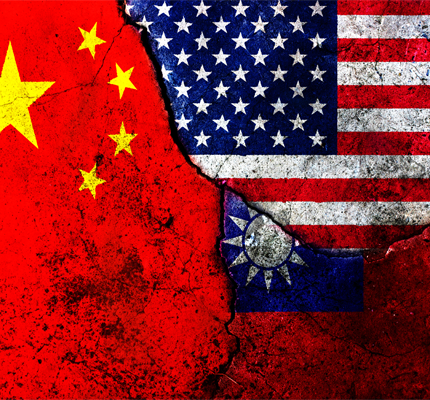
The United States, China, and Taiwan are locked in a communication impasse that feels destined for disaster. If we hope to avoid a catastrophe, then coming to a better understanding of the nuances of U.S.-China-Taiwan communication stands among the most pressing issues in the age of globalization and as one...

On February 13, 2021, 57 Senators, including seven Republicans, voted to convict ex-President Donald Trump. That number was ten shy of the number needed for a conviction on the one charge in the impeachment article: incitement to insurrection. However, the impeachment trial left us with several questions: What led the...

On January 6, 2021, then President Donald Trump spoke to a group of his supporters who had come to Washington, DC, to “protest” the outcome of the 2020 election. In his speech, Trump implored his supporters to march down Pennsylvania Avenue toward the Capitol in order to express their outrage...

The Trump administration’s response to COVID-19 can be characterized as disjointed, to put it mildly, or as chaotic, to be less charitable. President Trump has routinely contradicted the advice from the officials of the Centers for Disease Control, explained away the high number of cases as only the result of...