
Rooted in Relationships: Dr. Sonia Ivancic on Community-Engaged Scholarship
By Rachael E. Purtell
Dr. Sonia Ivancic, Associate Professor and Director of Graduate Studies in the Department of Communication at the University of South Florida (USF) after a Visiting Assistant Professorship at the University of Puget Sound, is a critical organizational and health communication scholar who is almost always conducting at least one community-engaged research project. Even her research that is not community-engaged leverages the resources and potential of academic research to increase well-being and make the world around her a better place to live and work. Earning her master’s from the University of Colorado, Boulder, and her Ph.D. from Ohio University in 2018, mentored by other applied communication and community-engaged scholars such as Dr. Larry Frey and Dr. Lynn Harter, respectively, Ivancic’s passion and skill for meaning-making through research were ignited early in her career. She also draws on her professional experiences in healthcare, food, and customer service to study issues of power and resistance, equity, and justice. More specifically, she is interested in politics and possibilities of social change in the contexts of work, health, and community organizing. She researches how storytelling, art, organizing, and resistance can reduce inequity and amplify marginalized voices; how organizations may stymie efforts towards equity and justice; and how the interaction between discourse and materiality (objects, place, material resources) plays a role in these efforts.
She defines community-engaged scholarship as, “being in partnership with local communities to use research to enact change or benefit that local community.” Ivancic went on to describe community-engaged work as collaborative, mutually beneficial, and highly grounded in relationships with the ultimate goals of “making some sort of material difference in people’s lives” and creating a deeper understanding of the world. She also emphasized the importance of centering the needs, concerns, and voices of community members rather than those of the researcher and described the process as “an embodied experience that makes you confront your privilege in unexpected ways.”
Ivancic’s first exposure to community-engaged research was her participation as an undergraduate student in Dr. Renee Houston’s work with the unhoused population of Tacoma, Washington. This project deeply motivated her desire to translate academic research to serve communities in need, rather than simply contributing to conversations within the ivory tower. When working on her own early community-engaged work as a Ph.D. student, Ivancic said that the possibilities that academic research can be extractive, “hit [her] in a very real way.” This encouraged her to think deeply about her positionality as an academic researcher in a given community. Researchers are using participants and their stories, and doing this may earn them a degree, or get them a publication, but participants are not necessarily benefiting from them. She added that her perspective on this is:
…deeply related to the history and context of Southeast Ohio, where companies have come in and extracted resources and left the area worse off…without really much consideration for the people who are there. Universities can sort of do similar things by not contributing back to those people, not getting their perspective, not asking what they need or what would benefit them.
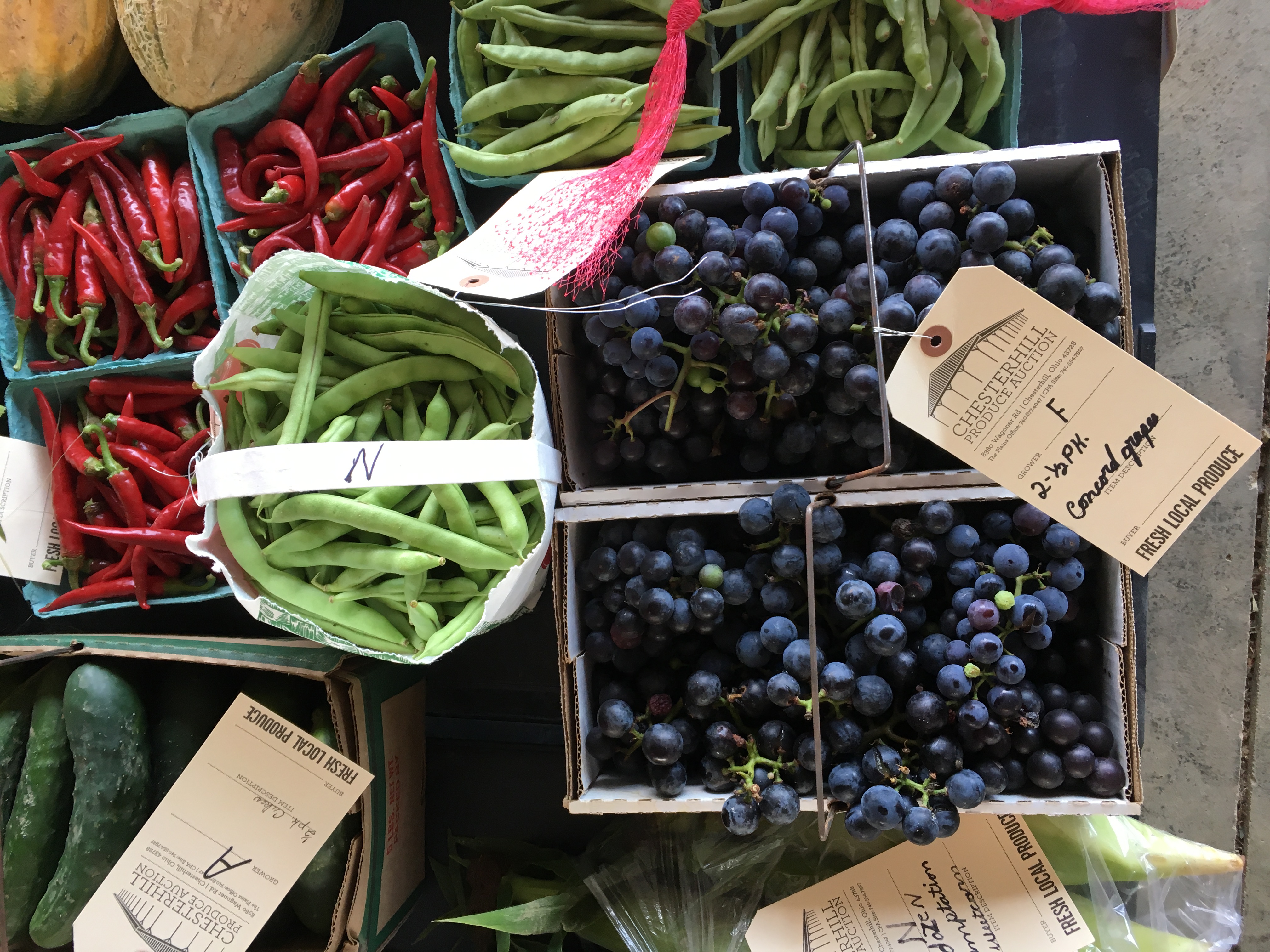
She recommends “doing the work on the ground of cultivating those relationships.” This means showing people that you care about what they have to say and asking how you can be of service to them.
While dissertating, Ivancic worked with a small nonprofit organization in southeast Ohio whose mission was to increase food access and foster food resilience in the region through a variety of programs. She was introduced to the executive director by a colleague and approached the organization by offering to work collaboratively with them. She contributed hundreds of hours of volunteer labor to the organization, which helped her gain an on-the-ground understanding of the organization’s activities, but also ensured that she was meaningfully contributing to the organization and her relationship with its members. She received a volunteer of the year award from this organization and later learned that the same executive director, now in a community-engaged role in an academic setting, refers to her project as an example of high-quality community-engaged research. Reflecting on this particularly meaningful experience in her career, Ivancic said:
You don’t always know in the moment, it’s sort of like, I hope I’m doing okay, I hope I’m doing this well, I hope they trust me, and that I’m thinking thoughtfully about who I am in this space. You get these little clues [in the moment] sometimes, even later on…. There’s an ebb and a flow, and that was a moment in time, and you hope you did it justice, and then you move on, and you write about it for years. It stays with you because of the relationships you had, and also [because of] the way in which we engage with data, stories, and research.
Ivancic is currently partnered with Healthy 22nd Street Gardeners, a woman-run coalition in East Tampa that seeks to increase access to gardening and fresh produce in an area where food access is generally, and structurally, limited. What initially drew her to this organization, was their emphasis on and responsiveness to community feedback, particularly on their Front Yard Gardening project, reflecting the relational values that Ivancic holds as a community-engaged scholar. The women who began Healthy 22nd Street originally considered creating a community garden. In their conversations with folks in the neighborhood, they found out that people did not want an entire garden plot but they did want to learn to grow food. The community organizers shifted their approach and won a grant to start a program that gave away barrels that fit on a porch or front yard. They paired this with workshops and gardening coaches. Now, that same community is in the process of creating a community garden, and that is happening from the ground up, by the members of the community. In addition to volunteering her labor and creating relationships, Ivancic has used her time with this organization to collect and amplify this group’s stories and create evidence of program impact. She explained that this organization is challenging the material reality of structural inequities through growing food and “growing a community together.” She added:
Part of what is so special about this group is they’re not just growing produce, they are this tight-knit community that is supporting each other. When a baby is born, or someone’s partner passes away, or something happens, they’re there for each other. It’s about more than food, it’s about the relationships, it’s about caring for each other.
To facilitate, in part, the centering of community voices, Ivancic conducts her community-engaged research with a primarily inductive approach. Although she will typically enter an organization with some idea of a communication question or phenomenon that she is interested in, she also leaves space to let her observations guide what she ends up focusing her project on within the confines of her particular expertise. This process is part of what lead her and her colleague, Dr. Kristen Okamoto, to create the concept of regionally attentive organizing as a crucial strategy for both organizing and community-engaged work more broadly. Regionally attentive organizing describes the “processes of organizing (food) resources in ways that are responsive to the discourses, history, cultures, and context of a particular place.” They argue that researchers should also be regionally attentive.
Ivancic says that voice is key in community-engaged scholarship, but can also be tricky because “community” itself is complex and laden with power dynamics that research(ers) may, in fact, play into. While it may be tempting to think of community as homogeneous, she explained that not everyone in a community will agree on the boundaries of where that community begins and ends. To manage, and enhance the ability to capture this complexity, Ivancic stresses the importance of transparency and creating opportunities for feedback and that trust is an ongoing process, not a destination or step to be completed in community-engaged research. She also stresses the importance of reflexivity of one’s own positionality as a researcher in a community space or place. She recommends that researchers continually examine questions of, “‘Who are you in this collaboration?’ ‘What do you bring with you?’ [and] How do people understand you in that space?”
Reflecting on the uniqueness, challenges, and beauty of community-engaged research’s spontaneous and embodied nature, Ivancic also recalled times where she conducted this work outside, in people’s gardens, in the rain, and among insects—all variables that might not come into play when thinking about traditional academic research. She also described conducting research while washing vegetables, lifting boxes of produce, and consciously demonstrating thoughtfulness and compassion when unexpectedly interacting with someone who might not have access to food. She described one particular moment several years ago where she was volunteering at a free seed giveaway in rural Ohio and a man walked up and asked what type of seeds were in a particular envelope. She explained “so I pulled out my cell phone and we did some Google searching and then we chatted about it.” He thanked her and took the seeds, but it occurred to her after he left, the real possibility that he may not have had a smartphone. At that particular moment in time and in that region, a smartphone was a potential marker of class. She called it an “embodied moment” that prompted reflection of what it meant to be in that space:
It just hits you, you have these powerful moments where you become very aware of your positionality, or what you brought to the scene, what assumptions maybe you had [that] you didn’t realize in ways that I think are honestly very beneficial to the research and to you as a person, if you’re being reflexive about them and thoughtful about them.
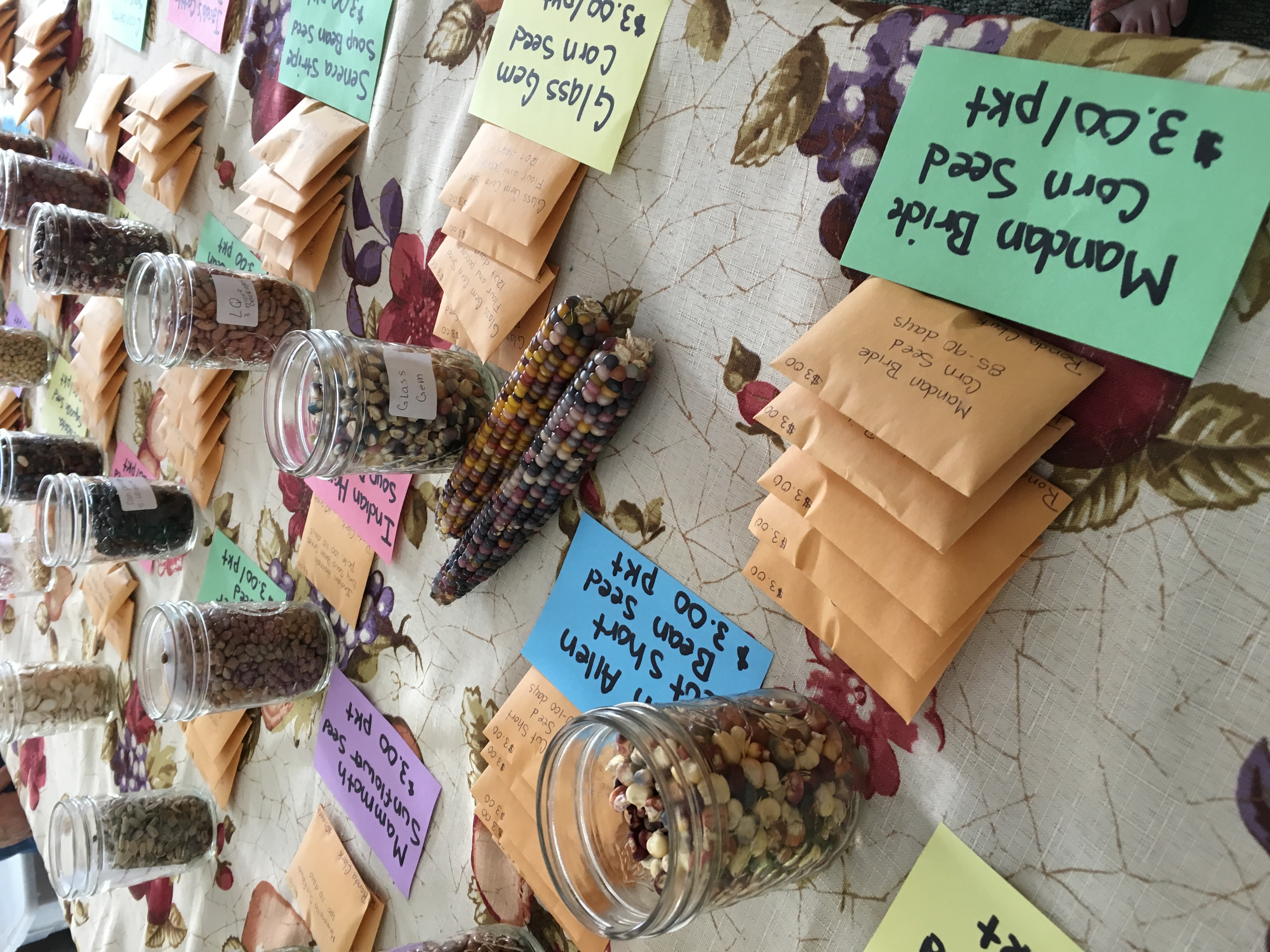
In addition to the networking and relationship-building strategies already mentioned, Ivancic leverages a variety of institutional and community resources, groups, and spaces to identify and engage potential community partners. Some of these include a Food Sovereignty Initiative at her institution comprised of both faculty and community partners, service-learning avenues available through USF, volunteering at local organizations such as Harvest Hope Community Garden, and generally attending related local events to foster existing relationships and initiate new ones.
Community-engaged research is certainly not without its challenges, with institutional barriers (e.g., IRB), distrust of academic research within marginalized communities, time, and material resources standing out to Ivancic as among the most significant. She stated, “IRB is designed for a very straightforward procedure and community-engaged work just isn’t like that.” She also said that although she recognizes the importance of a IRB, and does her best to conduct this work ethically within the confines of IRB decisions, the boundaries are often hard to define due to the relational nature of the work. She explained that where the research site begins and ends can be blurry: “Where do you draw the line between what is an event that the organization put on and one of the members hosted a dinner and I brought my kid? … IRB cannot account for that.” Ivancic explained that, often for good reason, people do not always trust researchers’ intentions. Ivancic recalled an experience where she was beginning a partnership with a community art organization that elected to withdraw from the project entirely at the first mention of an IRB.
Ivancic recommends that aspiring community-engaged scholars be flexible and adaptable to overcome these challenges, but also acknowledges that not all researchers who wish to do community-engaged work have access to the privilege of the large amounts of time required to do this work well. This can be due to institutional factors such as dissertation and promotion deadlines, as well as personal constraints such as parenthood. She also noted that we saw the onset of the COVID-19 pandemic shortly after she began her current position and moved to Tampa, making it especially challenging for her to integrate into the community during that time. She added that in some ways the pandemic enhanced our ability to collaborate across disciplines, space, and time, but it also revealed the limitations of these remote interactions and the importance of in-person connection.
Ivancic anticipates significant challenges ahead considering the current administration’s gutting of federal research funding and higher education resources. Moreover, she affirms that if universities wish to continue to be relevant in the current socio-political climate, then community-engagement is essential. Finally, she asserted that community-engaged scholarship plays a huge role in addressing pressing social issues and concluded:
I think that there’s going to be a lot of material need in our future, and at the moment, inequity is increasing. There’s going to be a huge need for researchers and universities to think about some creative ways we can address those [problems], unfortunately.

Nine years ago, I sat in front of a laptop in a cold, stale, tiny room no bigger than the average bathroom, finishing up my comprehensive exams for graduate school. While I should have given a breath of relief or a celebratory dance, I instead met this moment with a...

We have always been eager to talk with people about the “authentic higher education job market.” We used to talk with people as they came to grips with losing some imagined faculty life of musing over books and sharing their passion with eager students. Attaining tenured positions has not been...
There are still moments when I wake up in the middle of the night because I cannot stop thinking about the bureaucracy, the politics, the things people argue about, and, most of all, the time it takes to accomplish things in academia. Don’t get me wrong – I love being...

There is really only one reason you should pursue an Alt-Ac career: Because it is what you want to do. I do not consider my work to be an alternative to anything. It is just what I do. If someone refers to my work as an alternative to their work,...